

A career in dentistry offers the opportunity to improve oral health while building a respected medical profession. Every year, thousands of students apply for BDS admission, but selecting the right college requires more than qualifying in NEET. Understanding admission procedures, evaluating institutions, and preparing documents carefully can make the process much smoother.
Students and parents in Varanasi often have questions about counselling, eligibility, and how to identify a college that provides quality dental education. Learning these details before admissions begin helps reduce uncertainty and supports better decision-making.
What Is the BDS Course?
Bachelor of Dental Surgery (BDS) is the primary undergraduate degree for aspiring dentists. The program combines classroom learning with extensive clinical training, enabling students to diagnose, prevent, and treat dental conditions.
During the course, students study subjects such as:
- Dental Anatomy
- Oral Pathology
- General Medicine
- Oral Surgery
- Prosthodontics
- Orthodontics
- Periodontics
- Conservative Dentistry
- Community Dentistry
Clinical exposure plays a major role in developing practical skills.
Eligibility Requirements
To apply for BDS admission, students generally need to:
- Pass Class 12 with Physics, Chemistry, and Biology.
- Meet the required minimum marks.
- Qualify in NEET.
- Participate in centralized counselling.
Admission rules may differ slightly depending on the counselling authority and institution.
How to Evaluate a Dental College
Choosing a college should involve more than comparing fees.
Important considerations include:
- Recognition by the appropriate authorities
- Clinical patient exposure
- Faculty expertise
- Modern dental laboratories
- Internship quality
- Hospital affiliations
- Academic performance
- Campus facilities
A college with strong clinical training often prepares students more effectively for professional practice.
Common Admission Mistakes
Many students unknowingly reduce their chances by making avoidable errors.
Examples include:
- Selecting colleges without research
- Ignoring counselling schedules
- Uploading incomplete documents
- Missing verification appointments
- Filling unrealistic preferences
Careful planning can prevent these issues.
Career Opportunities After BDS
Dentistry offers a wide range of professional opportunities.
Graduates may choose careers in:
- Private dental practice
- Government hospitals
- Multi-speciality healthcare centres
- Academic institutions
- Research organisations
- Public health programs
- Dental product companies
Higher education can further expand specialization options.
Importance of Counselling Support
Admission counselling involves several stages, including registration, choice filling, seat allotment, reporting, and document verification. Families often seek experienced guidance to better understand available options and counselling procedures.
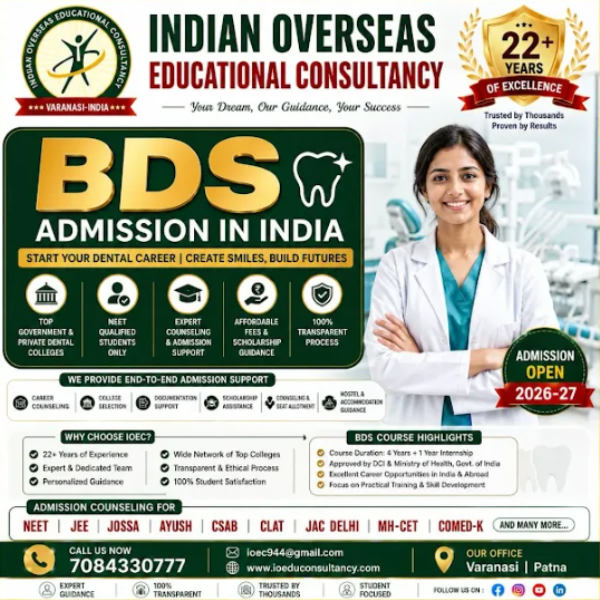
Many students in Varanasi consult Indian Overseas Educational Consultancy to gain clarity on admission processes, counselling updates, and college selection, making it easier to approach each stage with confidence.
Making an Informed Admission Decision
BDS admission is an important investment in a student's future. Researching colleges carefully, preparing documents in advance, understanding counselling timelines, and comparing institutions objectively can lead to better educational outcomes.
Students across Uttar Pradesh who stay informed throughout the admission process are more likely to secure a seat in a dental college that supports both academic excellence and long-term career growth.